A flooded basement
Make the power and gas safe, find the source, itemize and photograph before you throw anything out, then pump or vacuum the water once an electrician says it is safe.1,2 The EPA's goal is dry within 24 to 48 hours.3
Free service. Call now and we'll connect you with a local restoration company. How it works
In order
Six steps
- 01Before anything else
Power and gas first
If there is standing water and you can reach the main power switch from a dry spot, switch it off, even if it slows the cleanup. If you would have to enter the water to reach it, call an electrician.1 If you smell gas, close the main gas valve, open windows and leave at once.1 Salt Lake City's flood page adds that its gas utility will not relight gas appliances that have been exposed to water.2
- 02Next
Find where it is coming from
For a supply line, close the main shutoff.4 If the water is coming up from a floor drain, the city's Public Utilities department can make an initial assessment of water, sewer or storm-drain problems, but the city says private contractors may be needed for interior electrical, gas, and water or sewer issues.2
- 03Before you haul anything out
Itemize, then photograph
Salt Lake City tells homeowners to thoroughly document and itemize damaged property before disposing of it, because insurance claims need it.2 Keep damaged items until the adjuster has visited.5
- 04Today
Call your insurer or agent
The Utah Insurance Department advises calling your insurer or agent as soon as possible, photographing the damage, and making temporary repairs to prevent more damage while keeping all receipts. Do not have permanent repairs made until the insurer has inspected and you have agreed on the cost.6
- 05Hours 1 to 48
Pump it out, then dry it
Once an electrician has confirmed it is safe, the CDC says water can be removed with a wet-dry shop vacuum, a pump or a sump pump.1 Then fans and dehumidifiers, fans blowing outward.1 The EPA wants wet areas and items dry within 24 to 48 hours.3 Do not run a furnace that may be contaminated until it has been checked.3,1
- 06Any time
Sewage means stop
If the water includes sewage, the EPA says to call a professional experienced with that kind of damage.3 Throw away food that touched flood or storm water.1
Please don't
- Haul damaged things to the curb before you have itemized and photographed them.2,5
- Put paint, fuel, cleaners, batteries or aerosols in flood dumpsters. After the Rose Park flood the city sent household hazardous waste to the curb for county pickup.2
- Run a gas-powered pump or generator in the basement or garage.1
- Wade into water running down the street. Per the National Weather Service, a mere six inches of fast flood water is enough to knock over an adult.7
- Thaw a frozen pipe with a torch or any open flame.8
Mold timing
Basements and the two-day rule
In most cases mold will not grow if wet areas are dried within 24 to 48 hours.3
- NowMake it safe. Find the source. Itemize and photograph.
- Day 1Pump or vacuum standing water once an electrician says it is safe, then start air movement.1
- 24 to 48 hoursThe EPA's target for drying wet areas and items.3
- Closed up for daysThe CDC advises assuming mold is present if a flooded home has been closed up for several days.1
Checking out whoever answers
Ask these before work starts
Salt Lake City's own flood page recommends hiring contractors who hold a license and insurance.2
- Their Utah contractor license number, verified with the Division of Professional Licensing (DOPL). Utah law prohibits acting as, or representing oneself to be, a contractor without the required license or an exemption.10
- Which license covers the work. We found no source that settles whether drying-only work needs a license in Utah, so ask them and confirm with DOPL.
- The water category they assigned, and what they found.11
- A written, line-item estimate before work starts.5
- That permanent repairs wait until your insurer has inspected.6
Look up a license: Utah Division of Professional Licensing (DOPL)
How this works
What happens when you call
It is free to call, and calling commits you to nothing.
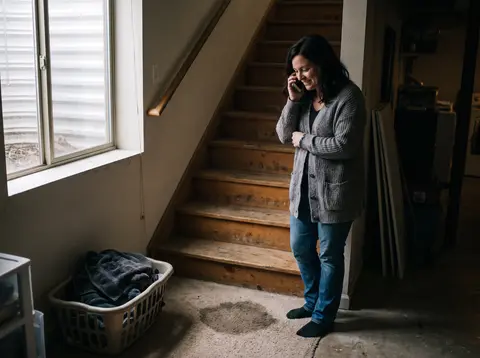
![A woman on the phone at the foot of the basement stairs, looking at a wet patch on the carpet.]() 1
You call
Tell them what happened and where. Have the address ready.
- 2
We connect you
A call network puts you through to an independent local restoration company that serves Salt Lake City and is taking calls.
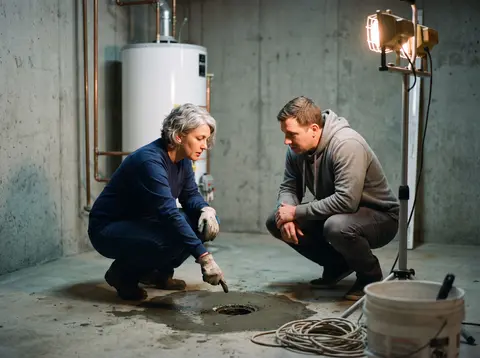
![A technician crouches by a basement floor drain, explaining what she sees to the homeowner beside her.]() 3
They assess and quote
If you want a visit, they look at the damage and quote their own price. Ask for it in writing.
We are a free referral service, not a contractor. The company that answers sets its own prices. How this service works
Want a local company to look at it?
Free to call. An independent restoration company that serves Salt Lake City answers, and you decide what happens next.
Call (801) 577-3288Salt Lake Water Damage Advice is a free referral and information service, not a contractor. Calls go through our call-tracking line to independent local restoration companies, and we may be paid when a call qualifies. We do not do the work and do not set prices or availability. How it works
Sources
Each numbered note on this page points here. We read every page on October 24, 2026. Where sources disagree we say so; where we could not find a source we left the claim out. We are not affiliated with any of these organizations.
- CDC, Safety Guidelines: Reentering Your Flooded Home. Page updated August 24, 2026. www.cdc.gov/floods/safety/reentering-your-flooded-home-safety.html
- Salt Lake City Corporation, Rose Park Neighborhood Flooding. Storm of October 3-4 (year not shown in the text we read). www.slc.gov/em/rose-park-neighborhood-flooding/
- U.S. EPA, A Brief Guide to Mold, Moisture and Your Home. Page updated February 18, 2026. www.epa.gov/mold/brief-guide-mold-moisture-and-your-home
- Triple-I (Insurance Information Institute), How to protect your home from water damage. No date shown (page copyright 2026). www.iii.org/article/how-to-protect-your-home-from-water-damage
- Triple-I (Insurance Information Institute), Settling insurance claims after a disaster. No date shown (page copyright 2026). www.iii.org/article/settling-insurance-claims-after-a-disaster
- Utah Insurance Department, Home Claims Information. No date shown. insurance.utah.gov/consumers/home-insurance/home-claims-info/
- National Weather Service (NOAA), Turn Around Don't Drown. Undated page, read October 24, 2026. www.weather.gov/safety/flood-turn-around-dont-drown
- American Red Cross, Preventing & Thawing Frozen Pipes. Copyright 2026. www.redcross.org/get-help/how-to-prepare-for-emergencies/types-of-emergencies/winter-storm…
- U.S. EPA, Mold Cleanup in Your Home. No date shown. www.epa.gov/mold/mold-cleanup-your-home
- Utah Legislature, Utah Code 58-55-501, Unlawful conduct (version effective May 12, 2020). Version effective May 12, 2020; the site labels it superseded January 1, 2027. le.utah.gov/xcode/Title58/Chapter55/C58-55-S501_2020051220200512.html
- IICRC, ANSI/IICRC S500 Consensus Body Issues Position Statement on Category of Water Damage and Weather-Related Events (press release). March 16, 2026. iicrc.org/wp-content/uploads/2026/04/Weather-Related-Water-Damage-Position-PR_March-2026.p…